Preparing for O-Level Physics in Potong Pasir: A Focused Study Plan
A search for Best Physics Tuition Potong Pasir often begins when a parent notices that O-Level Physics is becoming harder than expected. The student may still understand lessons in school, but test results start to wobble once questions combine formulas, diagrams, definitions, and application. At that point, the family does not need vague encouragement. They need a focused study plan that shows what to fix first.
O-Level Physics rewards steady preparation. Students cannot rely on a final burst of revision because the subject is built from linked skills: understanding concepts, applying them to new contexts, showing clear working, reading graphs, and writing precise explanations. For Potong Pasir students managing school, CCAs, and revision, a clear weekly plan makes the subject more manageable.
Start With a Diagnostic Review, Not More Worksheets
The first step is to understand why the marks are being lost. Some students have content gaps. Others know the content but lose marks through poor exam technique. Some are weak in calculations, while others struggle with explanation questions. Giving every student the same extra worksheets misses the point.
A useful diagnostic review looks at marked scripts and groups mistakes by cause. Did the student choose the wrong formula, misread the command word, forget a unit, skip a free-body diagram, or fail to explain cause and effect? Once the pattern is visible, revision becomes targeted. This is far more efficient than telling a student to study everything again.
Sec 3: Build the Core Concepts Properly
For Secondary 3 students, the priority is foundation. Topics such as measurement, kinematics, forces, moments, energy, thermal physics, waves, and electricity should be learned slowly enough for understanding to form. This is the stage where students should ask why a formula works, not only how to use it.
A good Sec 3 routine includes short weekly reviews, corrected homework, and topic summaries in the student’s own words. Students should not wait until exam season to organise notes. Every topic should end with three things: key definitions, common formulas with units, and two or three worked examples that show how the idea is applied.
Sec 4: Shift From Learning Topics to Applying Them
By Secondary 4, most students know many of the syllabus areas, but the exam demands more than knowledge. The focus should shift toward application, integration, and timing. Students should practise questions that mix topics, such as energy and forces, circuits and resistance, or waves and graph interpretation.
This is also the time to practise explaining answers. In O-Level Physics, students often lose marks because they write a correct keyword but not the reasoning that connects it to the situation. A good answer should show the physics link clearly. For example, in a cooling question, it is not enough to say heat is lost. The student must explain the direction of energy transfer and why the temperature changes.
Build a Weekly Potong Pasir Study Routine
A practical weekly plan works better than occasional long revision sessions. Students can split revision into three parts. First, review one recently taught topic. Second, correct one set of marked mistakes. Third, attempt a small number of unfamiliar questions under timed conditions. This keeps content, correction, and application active together.
For students attending lessons in Potong Pasir, the local routine can be built around school hours and travel time. The aim is to avoid a pattern where tuition happens but follow-up revision does not. A lesson is most useful when the student reviews it within a day or two, while the corrections are still fresh.
Use Past Papers in Stages
Past papers are valuable, but many students use them too early or too casually. In the early stage, topic-based practice is better because it helps isolate weaknesses. Once the student has covered enough content, mixed questions should be introduced. Full timed papers should come later, closer to prelims and the final O-Level preparation period.
After every paper, review matters more than the score. A student should mark each lost point by reason: content gap, careless calculation, weak explanation, missing unit, poor graph reading, or time pressure. This turns each paper into a map for the next round of revision.
Do Not Neglect Practical and Data Skills
Even in a Physics-focused plan, practical and data-based skills need attention. Students should know how to read graphs, interpret gradients, understand variables, identify sources of error, and describe trends accurately. These skills appear across practical assessments and written papers.
A student who can interpret a graph in an experiment is better prepared for structured questions involving motion, electricity, cooling, or waves. That is why practical reasoning should not be left to the final few weeks. It should be included throughout the revision plan.
How TGC Academy Helps Structure O-Level Preparation
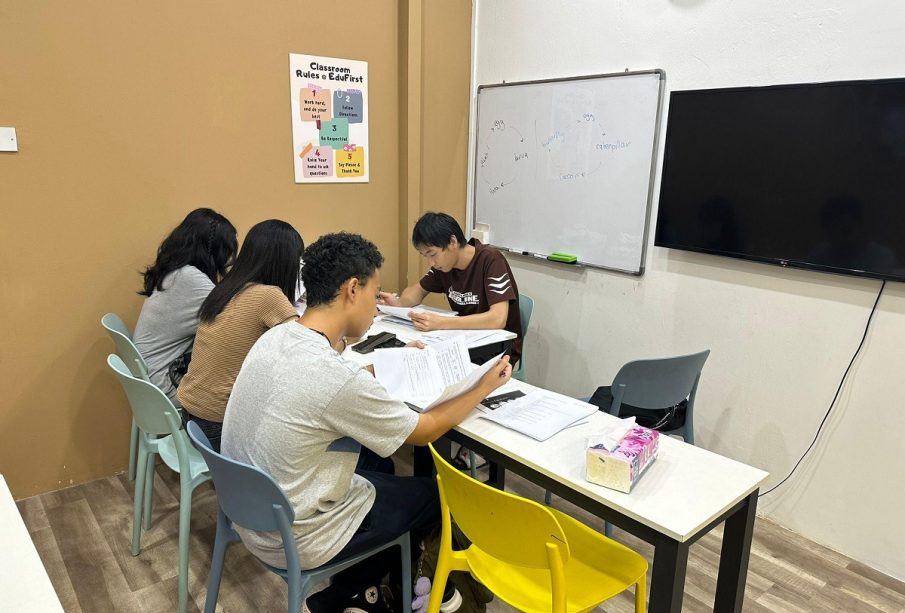
TGC Academy in Potong Pasir supports students by focusing on the reasons behind lost marks, not only the topics listed in the syllabus. Lessons can help students connect concepts, improve working, handle application questions, and build a more realistic revision routine. For families nearby, the local branch also makes regular attendance and follow-up easier to sustain.
The strongest plans are flexible. If a student improves in calculations but remains weak in explanations, the plan should change. If forces become stable but electricity remains confusing, practice should shift. This kind of adjustment is what keeps preparation focused instead of repetitive.
How Parents Can Monitor Progress Without Adding Pressure
Parents do not need to reteach Physics at home to support the plan. A simple weekly check is enough: what topic did you revise, what mistake did you correct, and what question still feels unclear? These questions encourage reflection without turning every conversation into a score discussion.
It also helps to keep school tests, worksheets, and tuition corrections together in one file. When a student can see repeated improvements, such as fewer unit mistakes or clearer graph answers, they become more willing to continue the routine. Progress feels more concrete when it is visible on paper.
Parents should also watch whether the student becomes more independent. A good plan should gradually reduce confusion, not create dependence on being told every step. When a student begins to identify their own weak questions and ask sharper doubts, the preparation is moving in the right direction.
Frequently Asked Questions
When should a student start preparing seriously for O-Level Physics?
Preparation should begin from Secondary 3, with steady consolidation after every topic. More intensive exam practice usually becomes important in Secondary 4, especially before prelims.
Is it better to revise topic by topic or do full papers?
Both are useful at different stages. Topic practice is better for fixing specific gaps, while full papers are better for timing and stamina closer to the exam.
How often should students practise Physics each week?
Short, consistent sessions work better than occasional cramming. A weekly mix of concept review, mistake correction, and exam-style practice is a strong starting point.
What is the most common O-Level Physics revision mistake?
Many students redo questions without studying why they lost marks. Reviewing the cause of each mistake is what turns practice into improvement.
Can local tuition help with consistency?
It can, especially when travel time is manageable and the student can attend lessons regularly. Consistency is important because Physics habits improve through repeated correction.
O-Level Physics becomes less overwhelming when preparation is broken into clear stages. Students need foundations in Sec 3, application practice in Sec 4, careful review of marked scripts, and a weekly routine they can actually maintain. For Potong Pasir families, the right local support can make that plan easier to follow.
TGC Academy (Potong Pasir) Location Details
- Business Name: TGC Academy (Potong Pasir)
- Address: 107 Potong Pasir Ave 1, #01-K1, Singapore 350107
- Phone: +65 8920 0792
- Email: [email protected]
- Website: https://www.tgc.sg/
- Operating Hours: Monday, Wednesday, Thursday, Friday: 3:00 PM to 10:00 PM; Saturday: 3:00 PM to 8:00 PM; Tuesday and Sunday: Closed
Google Map Location: