The Psychology Behind Popular Casino Game Choices
The gaming floor of a modern casino is a masterclass in behavioral psychology and environmental design. From the flashing lights and auditory cues of the slot machine banks to the quiet intensity of high-stakes card rooms, every square foot is engineered to appeal to specific human desires. Yet, walk into any gaming venue and you will notice a distinct separation among the patrons. Certain individuals head directly for the solitary rows of digital terminals, while others seek out the raucous atmosphere of the craps table or the calculated environment of the blackjack shoe.
These preferences are rarely random. The choice of a specific casino game is deeply rooted in individual psychological profiles, cognitive biases, risk tolerances, and desired emotional outcomes. By understanding the underlying mechanics of human behavior, it becomes clear how different games appeal to different psychological needs, offering everything from mindless escapism to the illusion of control.
The Cognitive Draw of Slot Machines
Slot machines and their digital counterparts represent the largest revenue generator for modern casinos. The demographic that frequents these games is incredibly diverse, yet the psychological triggers that keep players engaged remain remarkably consistent.
The Power of Variable Rewards
At the core of slot machine engagement is a psychological principle known as a variable ratio schedule of reinforcement. In simple terms, this means that rewards are delivered on an unpredictable basis. The human brain is naturally wired to seek patterns and predict outcomes. When an outcome is completely random, the brain releases a surge of dopamine every time the reels spin, driven by the anticipation of the unknown. The uncertainty itself becomes the primary driver of behavior, creating a powerful feedback loop that compels the player to pull the lever or press the button just one more time.
The Illusion of the Near Miss
Modern slot machines are meticulously programmed to trigger a cognitive phenomenon known as the near-miss effect. This occurs when two matching symbols land perfectly on the payline, while the third crucial symbol stops just above or below it. Psychologically, the brain does not interpret a near miss as a total loss. Instead, it processes the event as a sign that the player is getting closer to winning. This structural tease reactivates the dopamine reward pathways, encouraging continued play under the false assumption that a jackpot is imminent.
The Safe Zone of Escapism
Unlike table games, slot machines require zero strategy, mathematical calculations, or social interactions. For many players, this solitary environment is exactly the draw. Psychologists refer to this state as the slot machine zone. In this psychological space, the player enters a trance-like state of complete immersion, where the outside world, daily anxieties, and personal stressors disappear. The mechanical repetition of pressing a button, combined with rhythmic ambient sounds, provides a form of low-maintenance escapism that serves as a mental numbing agent.
The Need for Control: Skill-Based Table Games
On the opposite side of the psychological spectrum are table games like blackjack and poker. These environments attract individuals who reject the passivity of luck-based machines and instead demand agency over their financial outcomes.
The Illusion of Control and Strategy
Blackjack appeals heavily to analytical minds who find comfort in rules, probabilities, and structured decision-making. Players who master basic strategy feel a sense of intellectual superiority over the house. However, even the most disciplined player remains subject to the absolute mathematical house edge. The psychology here relies heavily on the illusion of control, where the player mistakes their genuine knowledge of the game’s rules for an ability to influence the random distribution of the cards.
The Social Dynamics of Competition
Poker introduces a layer of psychological complexity that is entirely unique on the casino floor: human competition. Poker players do not compete against the house; they compete against each other. This dynamic attracts competitive, ego-driven personalities who enjoy psychological warfare, strategic deception, and reading behavioral tells. The thrill of poker stems not just from winning money, but from outsmarting an opponent through superior strategy and tactical bluffing, fulfilling a profound need for personal validation and dominance.
High-Energy Camaraderie and Shared Destiny
Games like craps and roulette offer a completely different psychological environment, built entirely around shared emotional highs, public displays of excitement, and communal validation.
-
The Tribal Atmosphere of the Craps Table: The craps table is consistently the loudest area in a casino. This game leverages a powerful psychological force known as collective effervescence. Because the majority of players at a craps table bet with the shooter, the entire group wins or loses together. This shared destiny creates an intense tribal bond. When the dice roll in the group’s favor, the collective cheering and high-fives provide a massive rush of social validation that makes the experience feel intensely positive and communal.
-
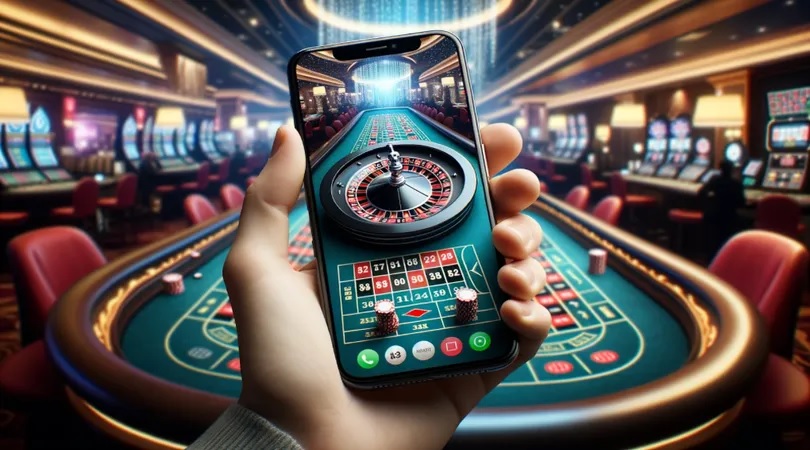
The Ritualistic Comfort of Roulette: Roulette offers a unique blend of high visual drama and low cognitive strain. Watching the physical ball spin around the wheel provides a theatrical countdown that intensifies anticipation. Roulette players often engage in complex ritualistic behaviors, such as tracking past winning numbers on electronic displays or placing elaborate bet configurations based on personal milestones. This satisfies a deeply human desire to impose order onto a completely chaotic, random system.
The Design of the Casino Ecosystem
The physical architecture of the casino floor works in perfect harmony with these individual psychological triggers to maximize time on device and overall player expenditure.
Traditional casino layouts intentionally omit clocks and windows, creating a timeless environment that disconnects the consumer from the passing of the day. Modern layout principles, often referred to as playground design, organize the space into small, welcoming clusters of games surrounded by high ceilings, soft lighting, and wide walkways. This layout reduces spatial anxiety and makes the environment feel safe and luxurious. Crucially, modern machines replace harsh alarms with pleasant musical chords tuned to specific keys that evoke feelings of wealth and serenity, ensuring that even a losing session feels emotionally comforting to the subconscious mind.
Frequently Asked Questions
Why do slot machines play triumphant music when a player wins an amount that is less than their initial bet?
This design choice is a calculated behavioral trigger known as a loss disguised as a win. If a player wagers two dollars on a spin and receives eighty cents back, they have fundamentally lost one dollar and twenty cents. However, the machine responds with flashing graphics, celebratory sounds, and a rising counter display. The brain processes these positive sensory cues instantly, registering the event as a successful victory rather than a net financial loss, which subtly encourages the player to maintain their session.
What psychological profile makes a person prefer high-stakes baccarat over other card games?
High-stakes baccarat appeals primarily to players who seek the prestige of high financial risk without the burden of strategic decision-making. Baccarat requires no mathematical skill or tactical choice from the player, as the dealer handles the cards according to rigid, predetermined rules. This attracts wealthy individuals who enjoy the exclusive atmosphere of high-limit rooms, the raw thrill of massive financial swings, and the pure, unadulterated exposure to absolute chance without the stress of cognitive execution.
How does the availability of digital touchscreens alter the psychological pace of modern gambling?
Digital touchscreens drastically accelerate the velocity of play by eliminating physical mechanical delays, such as collecting chips, manual shuffling, or waiting for a physical wheel to slow down. By reducing the time between individual wagers to fractions of a second, touchscreens minimize the brief cognitive windows where a player might otherwise pause, evaluate their mounting financial losses, and make a rational decision to exit the game.
Why do some roulette players believe that if a red number hits five times in a row, black is guaranteed to hit next?
This cognitive error is known as the gambler’s fallacy. It stems from a fundamental misunderstanding of independent probabilities. The roulette wheel has no memory; the physical probability of the ball landing on a black slot remains exactly identical on every single spin, regardless of past outcomes. The human mind naturally craves symmetry and order, leading players to falsely assume that a random system must immediately self-correct its temporary imbalances over a short timeline.
How do modern casinos use loyalty card data to appeal to player psychology?
Loyalty reward systems track a player’s exact behavior, including their preferred game choices, average bet sizes, speed of play, and total loss thresholds. Predictive marketing software analyzes this data to issue highly targeted, personalized rewards at the exact moment a user’s engagement begins to decline. By offering free play credits, complimentary dining, or hotel upgrades tailored precisely to the individual’s lifestyle desires, the casino reinforces their sense of value and prompts a rapid return to the gaming floor.
What is the psychological difference between betting on sports and playing classic casino table games?
Sports wagering appeals heavily to a concept known as ownership bias and the desire for intellectual validation. Sports bettors believe that their personal knowledge of athletic statistics, team dynamics, weather conditions, and player injuries gives them a distinct intellectual edge over the sportsbook creators. The psychological payoff in sports betting is deeply tied to this sense of expertise; winning a sports wager feels like a validation of the bettor’s analytical intelligence, whereas winning a table game feels more like a stroke of mechanical luck.